
_900.png "Ready-to-Use vs Concentrate Screenwash: The Complete Guide")
Ready-to-Use vs Concentrate Screenwash: The Complete Guide to Choosing What’s Right for Your Car
When it comes to maintaining clear visibility on the road, screenwash is one of those essential car maintenance products that often gets overlooked until you run out at the worst possible moment. Whether you’re facing a bug-splattered windscreen on a summer road trip or battling road grime during a cold winter morning, having the right screenwash can make all the difference to your driving safety.
But walk down the automotive aisle of any supermarket or garage, and you’ll quickly encounter a choice: ready-to-use screenwash or concentrate. On the surface, they might seem interchangeable, but the reality is more nuanced. Each option comes with its own set of advantages and trade-offs in terms of cost, convenience, performance, and environmental impact.
In this comprehensive guide, we’ll explore everything you need to know about both types of screenwash, helping you make an informed decision that suits your budget, lifestyle, and driving conditions.
Understanding the Basics: What’s the Difference?
Before diving into the pros and cons, it’s important to understand exactly what each type of screenwash offers and how they differ fundamentally.
Ready-to-Use Screenwash
Ready-to-use screenwash is exactly what it sounds like, a pre-diluted solution that’s ready to pour straight from the bottle into your car’s washer reservoir. As
Parkers automotive experts explain, ready-mixed screenwash is “pre-diluted and ready to pour, which makes it convenient and hassle-free.” These products are typically formulated for specific seasons; summer versions contain less antifreeze, while winter formulas offer protection down to temperatures as low as -10°C or even -15°C.
Most ready-to-use products come in 5-litre bottles, making them easy to store and transport. You simply pop open the cap and pour the entire contents into your washer bottle when needed. There’s no measuring, no mixing, and no fuss.
Concentrate Screenwash
Concentrate screenwash, on the other hand, is a potent solution that requires dilution with water before use. According to
Concentrated products require less packaging, so concentrated products are more cost-effective and eco-friendly, and they also allow you to adjust strength based on season or needs.”
The flexibility is the key selling point here. In summer, you might mix your concentrate at a ratio of 1:10 or even 1:20 (one part screenwash to ten or twenty parts water), which provides adequate cleaning power without the need for antifreeze protection. In winter, however, you’d use it much stronger, perhaps 1:1 or even neat (undiluted), to prevent freezing and ensure effective cleaning in harsh conditions.
This adaptability means that a single bottle of concentrate can serve you throughout the year, adjusting to seasonal requirements as needed.
Cost Comparison: Which Offers Better Value for Money?
For many drivers, cost is the deciding factor when choosing between ready-to-use and concentrate screenwash. The good news is that the numbers are fairly straightforward, though there are some nuances worth exploring.
Ready-to-Use Pricing
Ready-to-use screenwash typically costs between £4.50 and £8.99 for a 5-litre bottle, depending on the brand and temperature protection level.
With ready-to-use screenwash, you can pay anywhere from £0.92 to £1.80 per litre. The convenience factor is built into that price; you’re essentially paying for the water that’s already been added and the elimination of any mixing effort.
Concentrate Pricing and Dilution Economics
Concentrate screenwash appears more expensive upfront, but delivers significantly better value when you factor in dilution. A typical 5-litre bottle of concentrate costs between £5 and £8, with premium brands like Autoglym selling 500ml bottles for around £4.99.
The magic happens in the dilution.
Hagerty UK calculated that Halfords concentrate at a summer dilution rate of 4:1 works out to just £0.54 per litre mixed, compared to £1.37 per litre at winter strength.
The Verdict on Cost
In summer conditions, concentrate screenwash can be up to 60-70% cheaper per litre than ready-to-use products. Even in winter, when you need stronger concentrations, concentrates typically offer 30-50% better value. For drivers who go through screenwash regularly, particularly those with larger vehicles, multiple cars, or vehicles with headlight washers, the savings add up quickly. However, if you only top up occasionally, the convenience of ready-to-use might outweigh the modest cost difference.
Convenience Factor: Time vs Effort
While cost is important, convenience often tips the scales in real-world decision-making. Let’s examine the practical aspects of using each type.
Ready-to-Use: Ultimate Simplicity
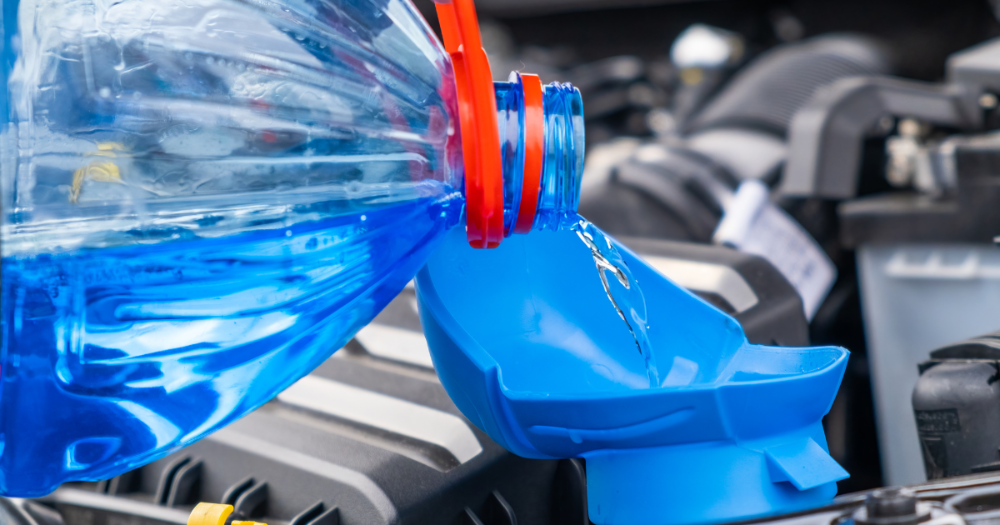
Ready-to-use screenwash wins hands-down in the convenience category. The process couldn’t be simpler: locate your washer reservoir (usually marked with a windscreen symbol under the bonnet), remove the cap, and pour in the pre-mixed solution until it reaches the maximum fill line. No measuring cups, no water source needed, and no risk of getting the dilution ratio wrong.
This simplicity is particularly valuable in certain scenarios:
- Emergency top-ups at petrol stations or car parks where water sources may not be readily available
- Quick refills for people who aren’t confident about mixing ratios or don’t want to deal with measuring
- Elderly or less mobile drivers who might find measuring and mixing physically challenging
- Company vehicles or fleet situations where consistency and simplicity matter more than cost per litre
Concentrate: Flexibility with Extra Steps
Using concentrate screenwash requires a bit more planning and effort. You’ll need:
- A measuring jug or container to get the dilution ratio right
- Access to clean water (tap water is fine for most screenwashes, though some enthusiasts prefer deionised water to avoid mineral deposits)
- A funnel for mess-free pouring
- Knowledge of the appropriate dilution ratio for current weather conditions
Getting the dilution right is crucial: Too little water, and you risk leaving a sticky residue or damaging your washer system. Too much water and you weaken its cleaning and antifreeze properties.
However, once you’re set up at home with the right equipment, mixing concentrate becomes a routine task that takes just a few extra minutes. Many experienced drivers keep an old 5-litre bottle specifically for mixing, which they can then store in the garage or boot for easy refills.
Seasonal Adaptability: Why Flexibility Matters
One of the most significant advantages of concentrate screenwash is the ability to adjust your mixture strength based on seasonal requirements, something that’s particularly important in the UK’s variable climate.
Summer Dilution: Maximum Economy
During the warmer months, freezing isn’t a concern, so you can dilute concentrate screenwash heavily, often at ratios of 1:10 or even 1:20.
In summer, a mix of 1:10 or 1:20 (screenwash to water) is usually fine. At these ratios, a 5-litre bottle of concentrate can produce 50-100 litres of usable screenwash, an incredible value for money.
With ready-to-use summer screenwash, you’re paying for a product that’s already diluted, potentially more than you need. You’re effectively paying for water and getting limited cleaning agents per bottle.
Winter Protection: Preventing Freeze-Ups
When temperatures drop, the equation changes dramatically.
In winter, stronger protection is needed, so ratios of 1:1 or even 2:1 are recommended, meaning equal parts or twice as much screenwash as water.
Some premium concentrates, when used neat (undiluted), can provide protection down to -45°C or even lower. While UK temperatures rarely reach these extremes, having this option means you can dial in exactly the level of protection you need based on the forecast.
Ready-to-use products, by contrast, come in fixed formulations. A winter-ready-to-use screenwash might be rated to -10°C or -15°C, which is adequate for most UK winters. However, if an unexpected cold snap hits and temperatures plummet to -12°C, your -10°C rated product could freeze in the reservoir or on the windscreen.
The Transition Period Problem
Another practical consideration is the changeover between seasons. With ready-to-use screenwash, you might find yourself with half a bottle of summer formula when autumn arrives, forcing a choice between continuing with inadequate protection or wasting the remaining product. Concentrate users can simply adjust their dilution ratio as needed, using the same bottle throughout the year.
.png)
Environmental Impact: Sustainability Matters
In an age of increasing environmental awareness, the ecological footprint of our automotive products matters more than ever. The difference between ready-to-use and concentrate screenwash extends far beyond your wallet.
Packaging and Plastic Waste
According to research from
Activa Contracts, the scale of screenwash consumption in the UK is staggering. The report reveals that “plastic bottles of screen wash are delivered to UK retailers and garage forecourts on 625,000 pallets, using eight million litres of fuel and two million tonnes of associated additional packaging.”
Concentrate screenwash dramatically reduces this impact. A single 5-litre bottle of concentrate, when diluted at summer ratios, can replace ten or more bottles of ready-to-use screenwash. That’s 90% less plastic waste, less fuel consumption in transportation, and significantly reduced carbon emissions.
Chemical Concentration and Environmental Release
An important environmental consideration is that when you don’t dilute, you’re increasing the amount of concentrated chemicals being released into the environment. Furthermore, if you’re using more product than necessary, you’re also contributing to the faster depletion of resources used in the packaging and transportation of these products.
Properly diluted concentrate ensures you’re using only the necessary amount of active chemicals, primarily surfactants and alcohols, while achieving the same cleaning results. Ready-to-use products, being pre-diluted, contain the same concentration of these chemicals whether you need that strength or not.
Transportation Footprint
Consider the logistics: transporting ready-to-use screenwash means shipping primarily water around the country. A lorry carrying 1,000 litres of ready-to-use screenwash is essentially transporting 900 litres of water and 100 litres of active ingredients. That same lorry could carry 5,000-10,000 litres worth of diluted product if transporting concentrates instead. The fuel savings and reduced emissions are substantial when multiplied across the entire supply chain.
Performance and Cleaning Power: Does Concentration Matter?
An important question many drivers ask is whether there’s any performance difference between properly diluted concentrate and ready-to-use screenwash. The answer is nuanced and depends on the specific products being compared.
Comparing Results From Both
When comparing any brand’s concentrate (properly diluted) versus a ready-to-use formula, performance is essentially equivalent. The manufacturer of the original solution is the defining factor, as well as the user's dilution choice. The active ingredients, surfactants for breaking down grime, alcohols for antifreeze protection, and water conditioners, are the same; it’s just the pre-mixing that differs.
The Importance of Proper Dilution
Performance issues with concentrate screenwash almost always stem from incorrect dilution.
The main issue you’ll encounter if you don’t dilute concentrated screenwash is residue build-up. A too-strong solution can leave behind a filmy substance on your windscreen, compromising visibility.
Conversely, over-diluting the concentrate reduces cleaning effectiveness and eliminates freeze protection. The key is following any manufacturer guidelines based on temperature and seasonal conditions.
.png)
Storage and Shelf Life Considerations
A practical aspect often overlooked is how each type of screenwash fits into your garage or storage space and how long it remains effective.
Space Efficiency
Concentrate screenwash is significantly more space-efficient. A 5-litre bottle of concentrate, which can make 50+ litres when diluted for summer use, takes up the same shelf space as a 5-litre bottle of ready-to-use that can only fill your washer reservoir once or twice. For those with limited garage space or who prefer to buy in bulk, this advantage is substantial.
Smaller concentrate bottles (500ml or 1 litre) are particularly convenient for storing in the car boot for emergency top-ups, though you’ll need access to water when you use them.
Shelf Life and Stability
Both concentrate and ready-to-use screenwashes have excellent shelf lives when stored properly, typically 3-5 years in unopened containers. However, concentrate has a slight edge because its higher alcohol content and lack of water make it more resistant to microbial growth and degradation. Ready-to-use screenwash, being already diluted, may be more susceptible to evaporation if stored in partially sealed containers, though this is rarely an issue with modern packaging.
Potential Pitfalls: What Can Go Wrong?
No discussion would be complete without examining the potential problems associated with each option and how to avoid them.
Concentrate Challenges
- Incorrect Dilution: The biggest risk with concentrate is mixing it incorrectly.
Be mindful that undiluted concentrate can be corrosive over time. Prolonged exposure could result in damage to your vehicle’s paint or even the rubber seals around the windscreen.
- Measuring Requirements: You need accurate measuring tools and must reference dilution charts, which some users find inconvenient.
- Water Quality: Using very hard water can lead to mineral deposits in washer jets over time, though this is usually a minor concern in the UK.
Ready-to-Use Challenges
- Seasonal Mismatch: Using the summer formula when temperatures drop unexpectedly can result in frozen washer systems.
- Over-Concentration in Winter: Winter-ready-to-use formulas contain high alcohol concentrations that you might not need during milder spells, essentially wasting money on excessive antifreeze protection.
- Storage and Spillage: Larger 5-litre bottles can be unwieldy when nearly full, and spills waste the entire pre-mixed product.
Making the Right Choice: Recommendations by Driver Type
So which should you choose? The answer depends on your specific circumstances, priorities, and driving habits.
Choose Ready-to-Use Screenwash If:
- You prioritise convenience above all else and don’t mind paying extra for the simplicity
- You only need to top up occasionally and don’t use much screenwash
- You’re uncomfortable with measuring and mixing products
- You frequently need emergency top-ups away from home
- You live in an area with stable, predictable weather patterns and can commit to one seasonal formula
Choose Concentrate Screenwash If:
- You want the best value for money and go through screenwash regularly
- Environmental impact is a priority, and you want to minimise plastic waste
- You appreciate the flexibility to adjust dilution based on weather conditions
- You have easy access to water at home for mixing
- You own multiple vehicles or have high screenwash consumption
- You have limited storage space and want maximum efficiency
.png)
Final Verdict: The Smart Choice Depends on You
After examining every angle, from cost and convenience to environmental impact and performance, the question of whether to choose ready-to-use or concentrate screenwash doesn’t have a universal answer. Both have legitimate places in the market, serving different needs and priorities.
Concentrate screenwash emerges as the winner for most drivers who:
- Use screenwash regularly and want maximum value
- Care about environmental sustainability
- Want flexibility to adapt to changing weather
- Don’t mind spending a few extra minutes mixing
The potential savings are substantial, up to 70% compared to ready-to-use in summer conditions, and the environmental benefits are undeniable. With a single 5-litre bottle potentially replacing ten bottles of ready-to-use screenwash, you’re cutting plastic waste by 90%.
Ready-to-use screenwash remains the sensible choice for:
- Occasional users who top up infrequently
- Drivers who value absolute convenience
- Emergencies where mixing isn’t practical
- Those uncomfortable with measuring and diluting products
The premium you pay for ready-to-use is essentially a convenience charge; you’re paying for the water and the mixing to be done for you.
Perhaps the most pragmatic approach is a hybrid strategy: keep concentrate at home for regular filling and a bottle of ready-to-use in the car boot for unexpected top-ups. This gives you the cost savings and flexibility of concentrate for routine use while maintaining the convenience of ready-to-use for emergencies.
Whichever route you choose, the most important thing is ensuring your screenwash reservoir is never empty. Clear visibility isn’t just about comfort; it’s a critical safety issue. Whether you achieve that with carefully diluted concentrate or grab-and-go ready-to-use, you’re making a responsible choice for road safety.
In 2026, with environmental concerns increasingly at the forefront and household budgets under pressure, concentrate screenwash represents the smarter long-term choice for most drivers. But ready-to-use absolutely has its place for those times when convenience trumps cost. The key is understanding your needs and choosing accordingly, because at the end of the day, the best screenwash is the one that keeps your windscreen spotlessly clean and your driving safe.
References
Parkers. (2026). The best screenwash tested by Parkers 2026Hagerty UK. (2023). Reviewed & Rated: The best screenwash testedActiva Contracts. Vgroup International Joins War On Plastic With New Tablet Vehicle Screen Wash